Start with the main thread.
Write a short account of what happened, the people involved and what you want your adviser to understand. Keep the detail in the supporting record.

Your first conversation is about understanding what you have, what happened, and where organization could help. A few simple preparations make that conversation more useful.
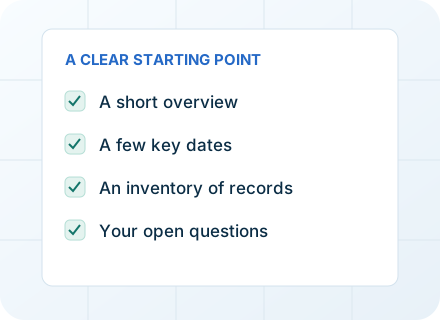
A simple reference sheet can help you explain your account without trying to remember everything at once.
Write a short account of what happened, the people involved and what you want your adviser to understand. Keep the detail in the supporting record.
List the dates and evidence references you expect to discuss. Keep originals and fuller context available alongside your summary.
Separate confirmed details from recollections and unanswered questions. Ask your professional adviser about the decisions that need their expertise.
CaseInView helps clarify the factual record. Your attorney remains responsible for legal advice, strategy and representation; preparation does not guarantee a particular result.
In a few sentences, describe the matter and what is difficult to understand or organize. Separate your own recollection from details you can connect to a record.
Note a handful of major events. Approximate dates are fine if marked as approximate. If two records give different dates, flag the conflict rather than selecting one without explanation.
What is unclear? Which events are difficult to place? Where does one record appear to conflict with another? These questions help define the analytical work.
Do not upload case files, account numbers, medical records, or sensitive personal information through a public inquiry form. Agree on a suitable transfer method before sharing records. Preserve your originals.
A written Case Assessment Report covering the initial overview, available information, gaps, organization recommendations, and recommended scope. The assessment is $200 for 60 minutes, fully credited if you retain a package within 14 days.
Schedule your assessment